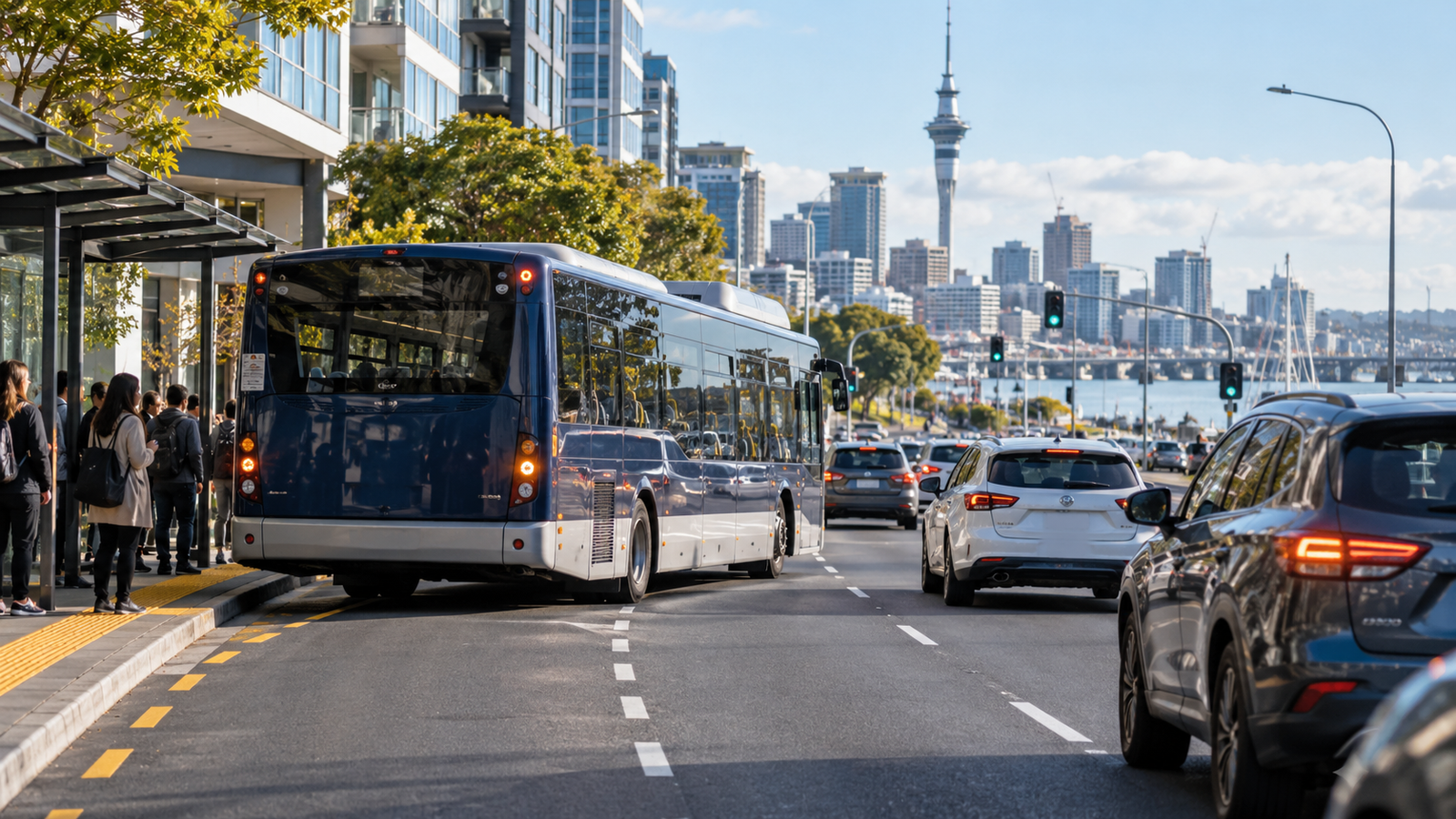
From 1 October 2026, New Zealand road users must give way to buses leaving a bus stop, the roadside or a bus lane on roads with a speed limit of 60 km/h or less.
The bus driver must indicate the intention to move for at least three seconds, giving other road users time to react and giving the bus driver time to check that it is safe to move.
NZ Transport Agency: New lane use rules
On paper, this looks like a small rule change. From a bus driver’s seat, it is not small at all.
A route can lose minutes in five-second pieces
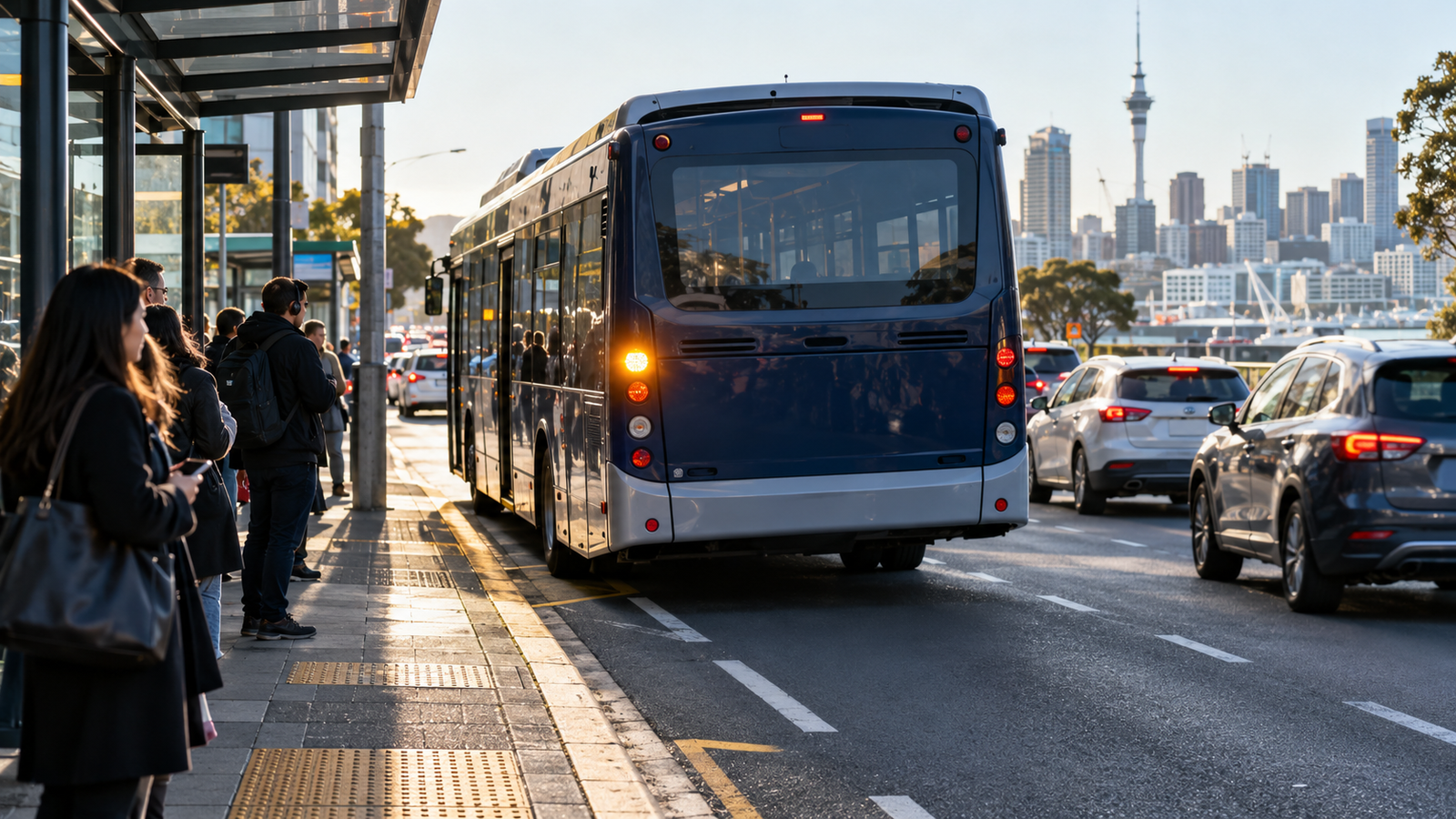
A busy urban bus route may enter and leave stops dozens of times during a single trip.
If a driver has to wait only five seconds for a gap at one stop, the delay looks insignificant. But repeat that 20 or 30 times and the accumulated delay becomes meaningful. At difficult stops, waiting can be 10, 20 or 30 seconds or more.
Those delays affect the following intersection, the next stop, passenger connections and eventually the timetable of the entire service.
A bus carrying dozens of passengers can therefore lose substantial collective travel time because one vehicle has difficulty re-entering traffic.
It is also one of the most uncomfortable moments for a bus driver
Leaving a bus stop requires a large vehicle to accelerate from stationary into moving traffic.
When surrounding traffic is flowing quickly, the speed difference can be significant. The driver is watching mirrors, cyclists, pedestrians, passengers inside the bus and vehicles approaching from behind at the same time.
A clear give-way rule reduces uncertainty.
It does not mean a bus driver can pull out blindly. The driver still has to indicate for at least three seconds and make sure the movement can be completed safely.
But it changes the expectation between the bus and approaching traffic.
Giving way helps the people on the bus — and can help the road network
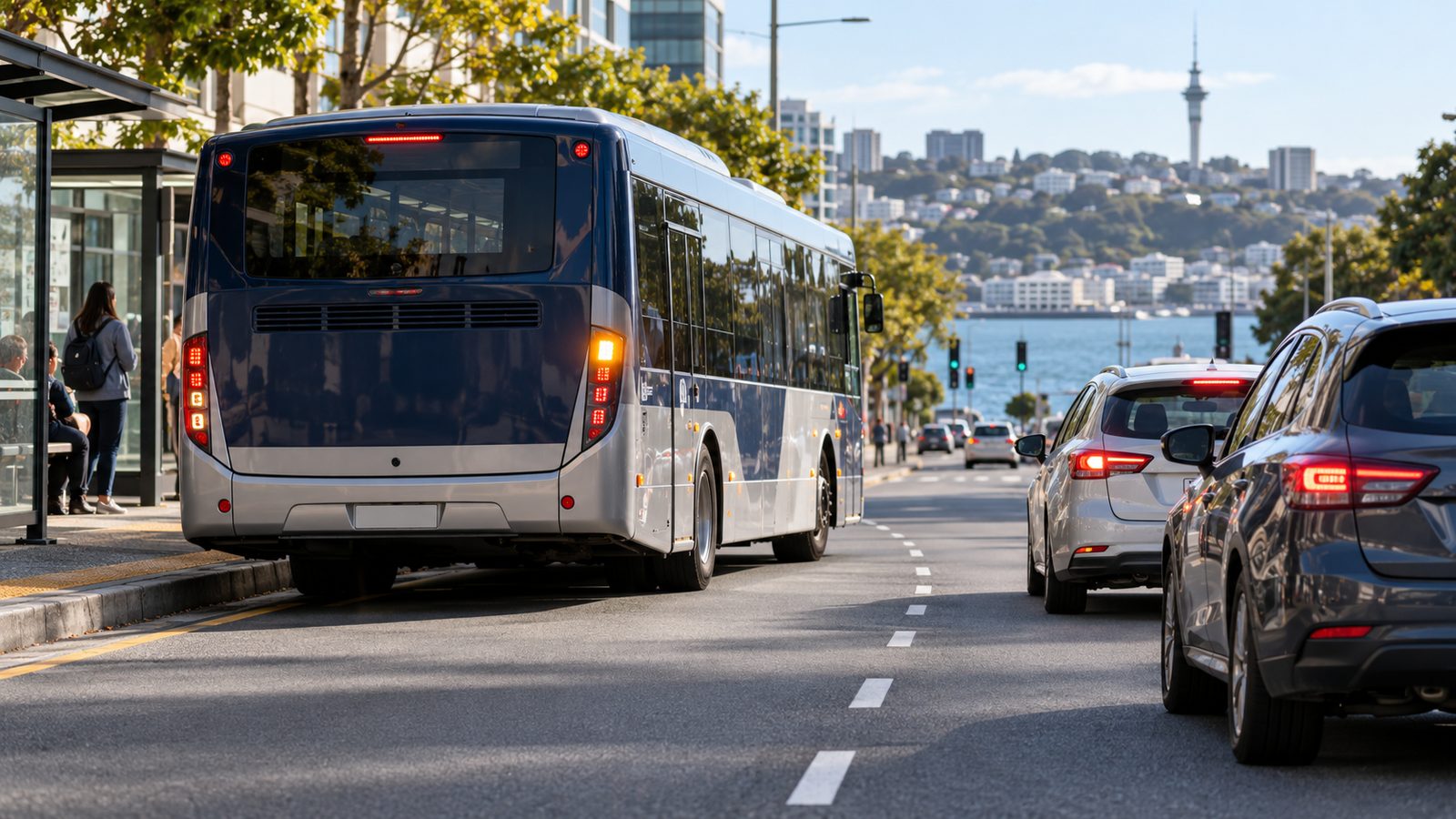
A bus is not simply another vehicle occupying one space in the traffic stream. It may be carrying 20, 40 or more people.
If a bus containing many passengers is repeatedly trapped at stops while individual cars pass, the network is effectively giving priority to lower-capacity movement.
Allowing the bus to re-enter traffic more smoothly improves timetable reliability and passenger experience. It can also reduce stop-start behaviour around bus stops and make traffic movement more predictable.
The benefit is especially important during morning and afternoon peaks, when small delays accumulate fastest.
The next improvement should be clearer communication to drivers behind the bus
The new law creates the give-way rule, but communication between a bus and surrounding traffic could still be improved.
Modern buses already use large destination displays and multiple warning lights. It is worth considering whether New Zealand should develop a standardised rear auxiliary indication to make a bus’s intention to merge even clearer.
For example, a regulated rear display could reinforce the normal indicator with a simple message such as BUS MERGING or PLEASE GIVE WAY.
This should not be an improvised operator-by-operator system. Any additional lighting or display would need a consistent national standard so drivers instantly understand what it means and so it complies with vehicle-lighting requirements.
School buses show why visibility matters
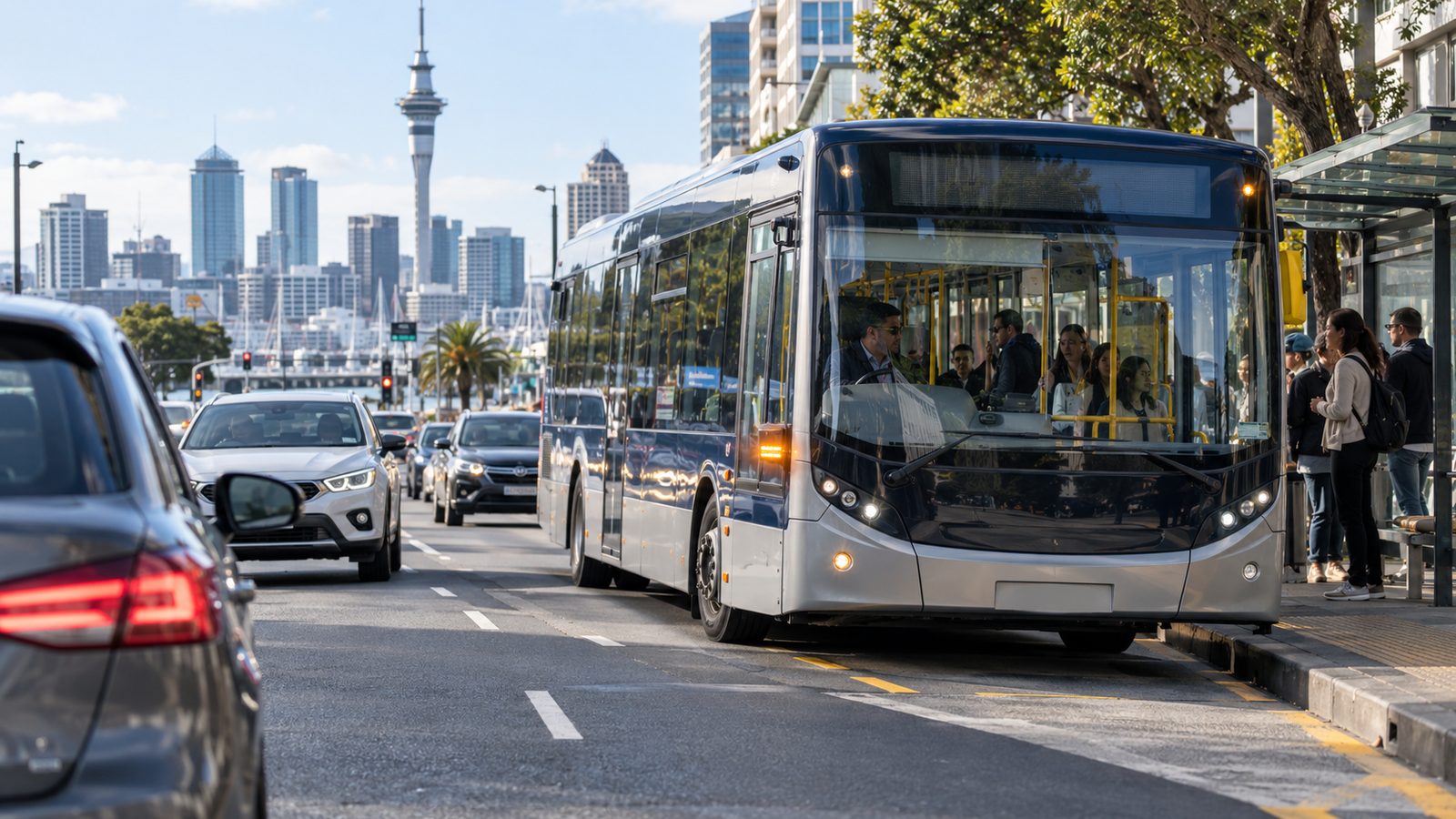
New Zealand already recognises that some bus movements require unusually clear warnings. Drivers passing a school bus that is stopped for children must travel at 20 km/h or less until they are safely past it.
School-bus signage exists because the risk is different from an ordinary vehicle stopping at the roadside.
The same principle can inform future bus communication systems: when the behaviour expected from surrounding drivers is important, the signal should be obvious.
A small courtesy repeated thousands of times becomes a transport policy
Drivers may experience giving way to a bus as a delay of only a few seconds.
For the bus network, those seconds are repeated across thousands of stops and thousands of passengers.
The new rule recognises that public transport reliability is partly determined by what happens in the small gaps between major infrastructure projects.
A better bus network does not only need new buses and new busways. It also needs buses to be able to leave the stop.
For bus drivers, the change should reduce uncertainty and some of the risk involved in merging back into traffic.
For passengers, it should mean fewer unnecessary delays.
And for other road users, it creates one simple expectation: when a bus has indicated for at least three seconds and is ready to leave a stop on a road at 60 km/h or below, give it the space to re-enter safely.