
A bus driver should not be left to solve a road-design failure through an unsafe pass. Cyclists and e-scooters need protection, but they also need clear responsibilities, suitable infrastructure and rules that match what their devices can actually do.
NZ Bus Driver commentary. Current NZTA guidance checked 16 October 2026. Proposed reforms below are not presented as existing legal requirements.
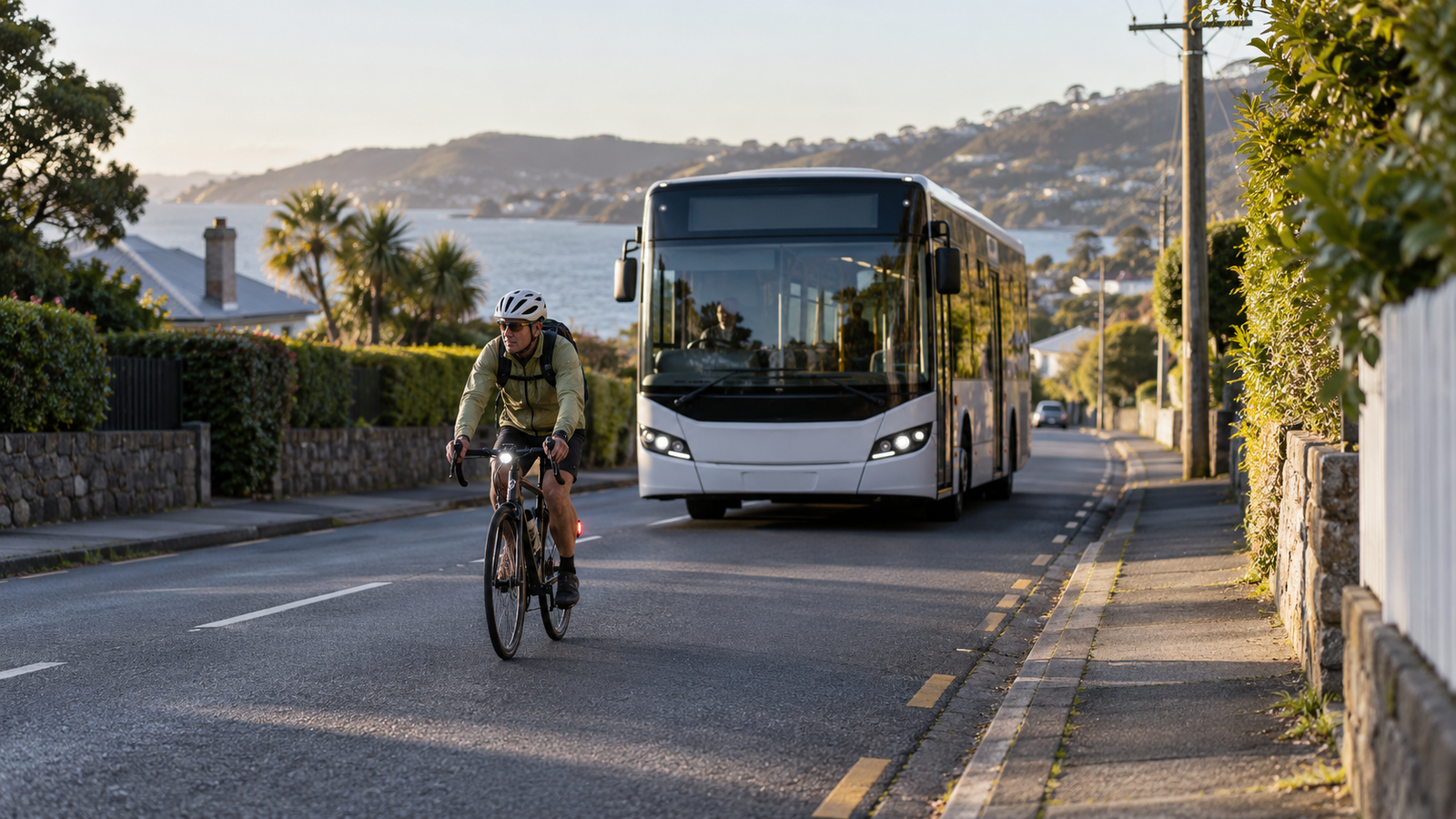
Can a cyclist use an ordinary traffic lane?
Yes, subject to the restrictions applying to the particular road. NZTA’s cycling code says riders have the right to use the road and are not generally required to use a cycle lane or path merely because one is available.
That does not mean every road is open to every device. An ordinary road with a 50 or 60 km/h limit is not the same as a motorway. The legal road type, signs and device classification matter.
On a narrow section, a rider may take a more central position to discourage an unsafe squeeze past or avoid hazards. A driver may experience that as an obstruction, while the rider may be responding to a lack of safe space. Both experiences should inform road design.
Does a narrow lane cancel the 1.5-metre requirement?
No automatic cancellation follows from the rider choosing that route. NZTA’s current lane-use guidance requires at least 1.5 metres when passing a road user who is not driving a motor vehicle and is travelling in the same direction in the same lane. Where a safe pass is not possible, the instruction is to slow and wait until it is.
For a wide bus, a nominally wide lane may still provide insufficient room once the bicycle, roadside hazards and passing clearance are considered. Oncoming traffic and visibility can prevent using additional road space safely. Timetable pressure does not create permission to squeeze through.
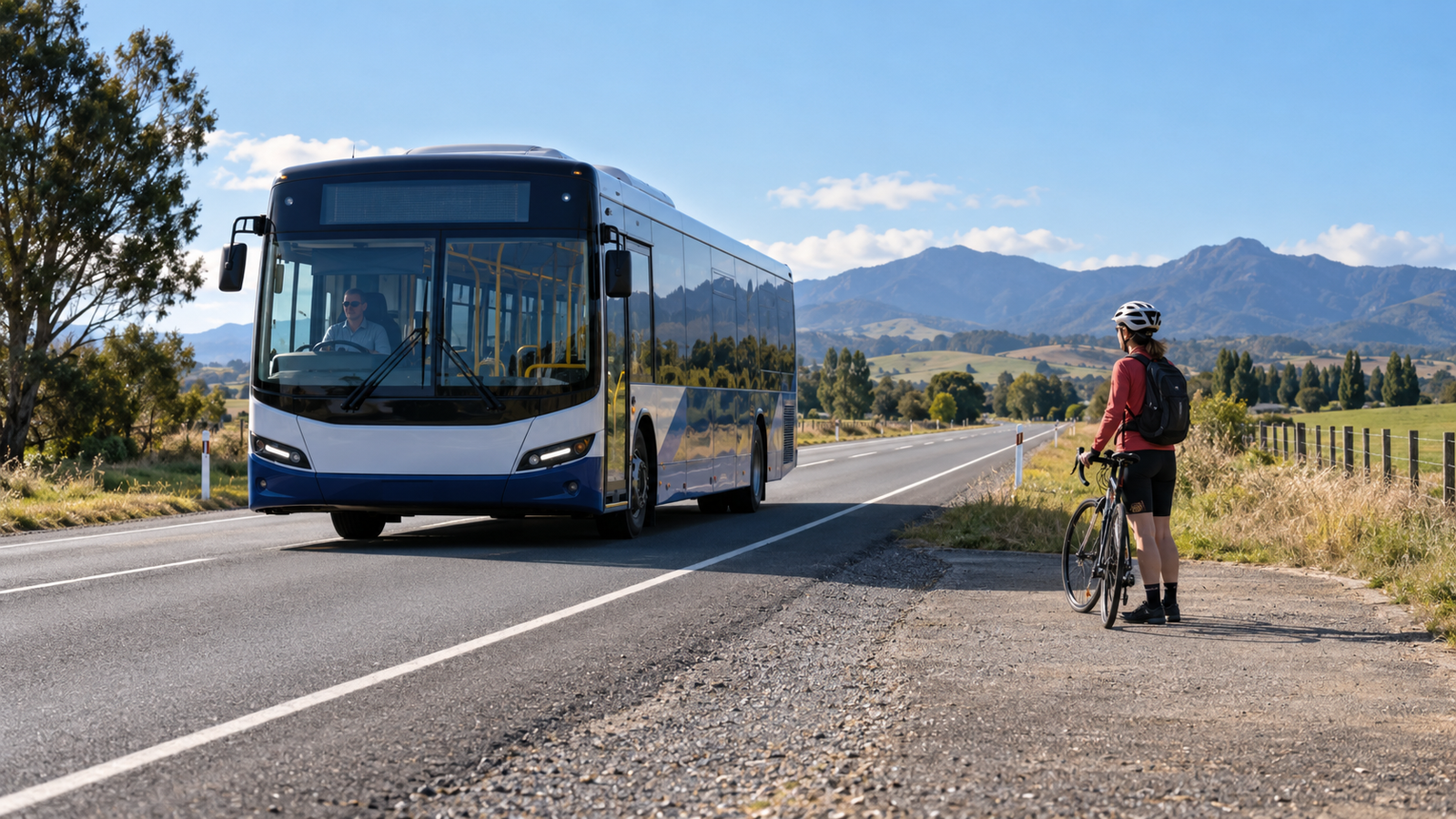
Rider cooperation should be clearer too
NZTA’s cycling code advises riders taking the lane for longer sections or travelling slowly to check following traffic and allow it to pass when safe. This should be distinguished from claiming that a particular fine or mandatory pull-over interval already exists.
NZ Bus Driver argues for an explicit duty not to unreasonably obstruct normal traffic on narrow roads. Where road conditions, visibility, the speed limit and rider capability make it safe, a rider choosing to remain in the traffic lane should aim to maintain more than 40 km/h. On non-uphill narrow sections, riding below 30 km/h while materially holding up following traffic should be separately defined and assessed as potentially obstructive conduct.
These 40 km/h and 30 km/h thresholds are proposals for policy debate, not existing legal minimum speeds. They should be tested against road geometry, junctions, weather, fatigue, disability, mechanical problems and emergency situations. They must never require unsafe acceleration, speeding or entry into a dangerous verge. Where a rider cannot safely maintain the proposed pace, the proposed duty should be to release following traffic at the next safe opportunity, rather than force the rider to race.
Cycling is not suitable for every person on every route under every condition. Choosing a bicycle does not by itself justify prolonged avoidable obstruction of ordinary commuters, including people carrying substantial fuel costs and vehicle-related taxes and charges. Those financial burdens deserve consideration in transport policy, although paying them does not purchase exclusive road access or cancel another user’s safety protection.
Safe passing places and a realistic alternative route must be part of the assessment. A rule that demands traffic flow without providing space to cooperate would simply transfer a road-design failure onto users. The existing passing clearance must continue to apply while any reform is debated.
The cost of using a shared road should be expressed through proportionate duties and enforcement, not a loss of basic safety protection. One person’s delay cannot justify exposing another to a dangerous close pass.
Measure transport efficiency in people, not just vehicles
A bus may carry dozens of passengers. Repeated delays affect those passengers, connections and the driver’s schedule. This gives public transport a legitimate place in debates about road capacity.
It does not establish that every slower road user lacks a right to be there. A fair assessment should consider people moved, access needs, safety and the alternatives genuinely available.
Road authorities should identify recurring conflict sections and assess passing opportunities, intersection design, separated provision and network alternatives. Operators should account for safe-following delays in timetable design and avoid penalising drivers for complying with road rules.
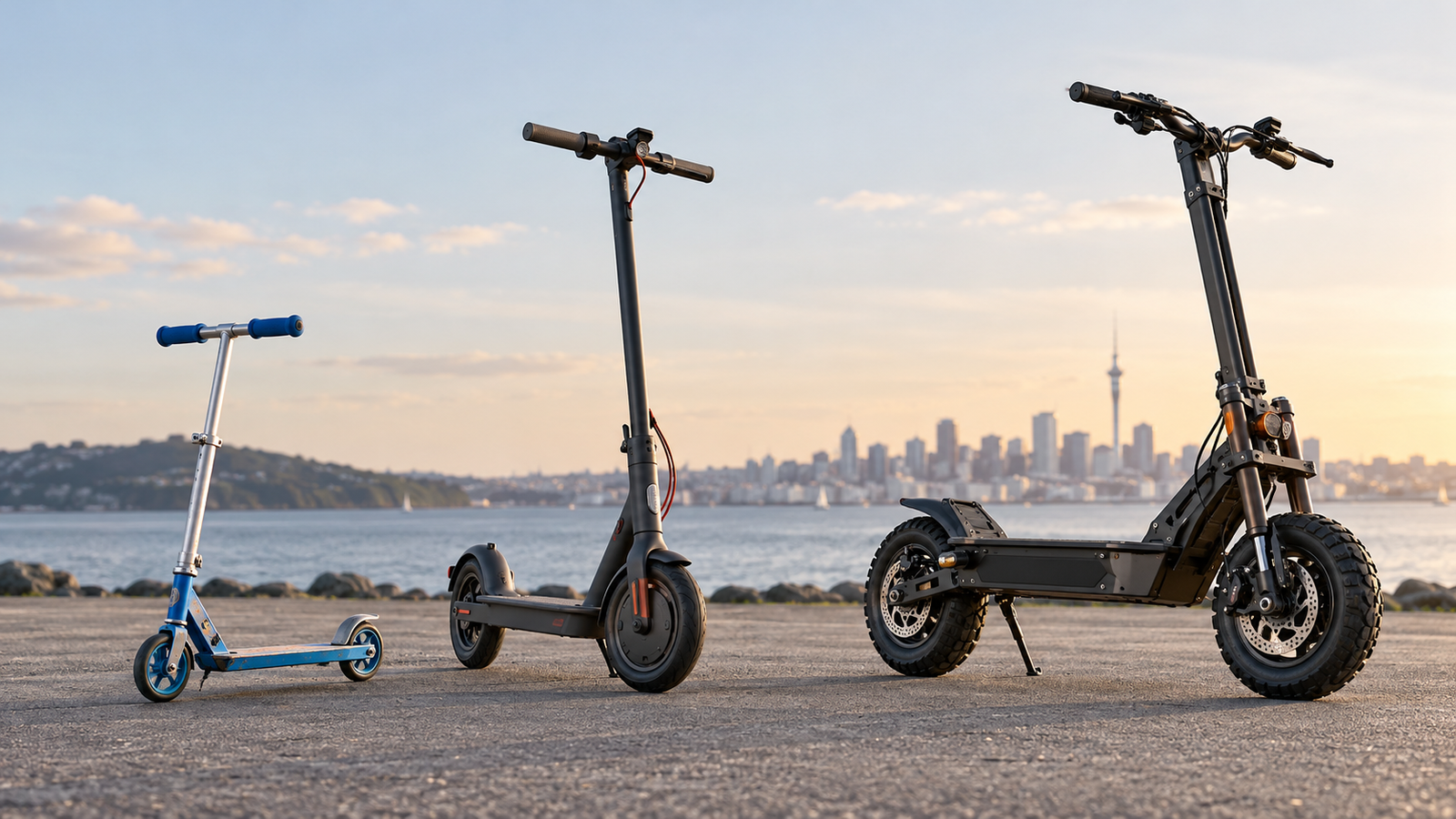
An electric scooter is not automatically a child’s toy
The word ‘scooter’ covers devices with very different speed, mass, braking and acceleration. A human-powered kick scooter and a powerful electric device may look related while creating different risks.
Under NZTA’s low-powered vehicle requirements and the relevant declaration, qualifying e-scooters with a maximum power output no greater than 300 watts can be excluded from the motor-vehicle classification. Other criteria also apply. NZTA explains its interpretation of rated or standard power; the marketing label alone does not establish compliance.
Devices outside those criteria cannot simply claim the same exemption. Nor should a fast model be assumed legally equivalent to a motorcycle without checking the applicable classification and requirements.
NZTA guidance permits qualifying e-scooters on footpaths, roads and designated cycle lanes. Users still have obligations, including giving way to pedestrians on footpaths. This is not permission to ride anywhere at any speed.
Regulation should follow performance and use
NZ Bus Driver proposes reviewing device classes against design speed, power, mass, braking and the places where they operate. Possible requirements should be assessed for age limits, training, helmets, lights, braking standards and identification or registration for higher-risk classes.
These are proposals, not a claim that all such duties currently apply. Rules must also distinguish children learning to use a low-speed device from adults operating a much faster one.
Transitions between footpath, driveway, crossing and traffic lane deserve particular attention. A driver needs predictable behaviour, and a rider needs rules that can be understood before entering the conflict point.
Legal identity should not change after a collision
A rider should not be classified opportunistically according to whom they hit or who hits them. Device classification should be established beforehand. Collision responsibility then depends on the applicable obligations, location, speed, movements and evidence.
NZ Bus Driver proposes that an e-scooter user operating in a general traffic lane, outside a designated cycle lane, should bear ordinary driver-like duties appropriate to that use. Collisions between such users and other drivers should be assessed under a consistent road-driving responsibility framework: lane position, lookout, speed, signalling, priority and the evidence of each person’s conduct. This is a proposed reform; entering a carriageway does not itself convert an exempt e-scooter into a motor vehicle under current law.
Vulnerability is not an exemption from responsibility. A user who causes a collision through an unsafe manoeuvre should be held accountable on the evidence. The same principle applies to every driver. Physical vulnerability must not determine fault in advance, and it must not remove the duty of others to take reasonable care.
Being on a footpath does not remove the duty to give way to pedestrians. NZTA’s rider guidance makes that obligation clear. Equally, being in the carriageway does not remove a rider’s entitlement to reasonable care from drivers.
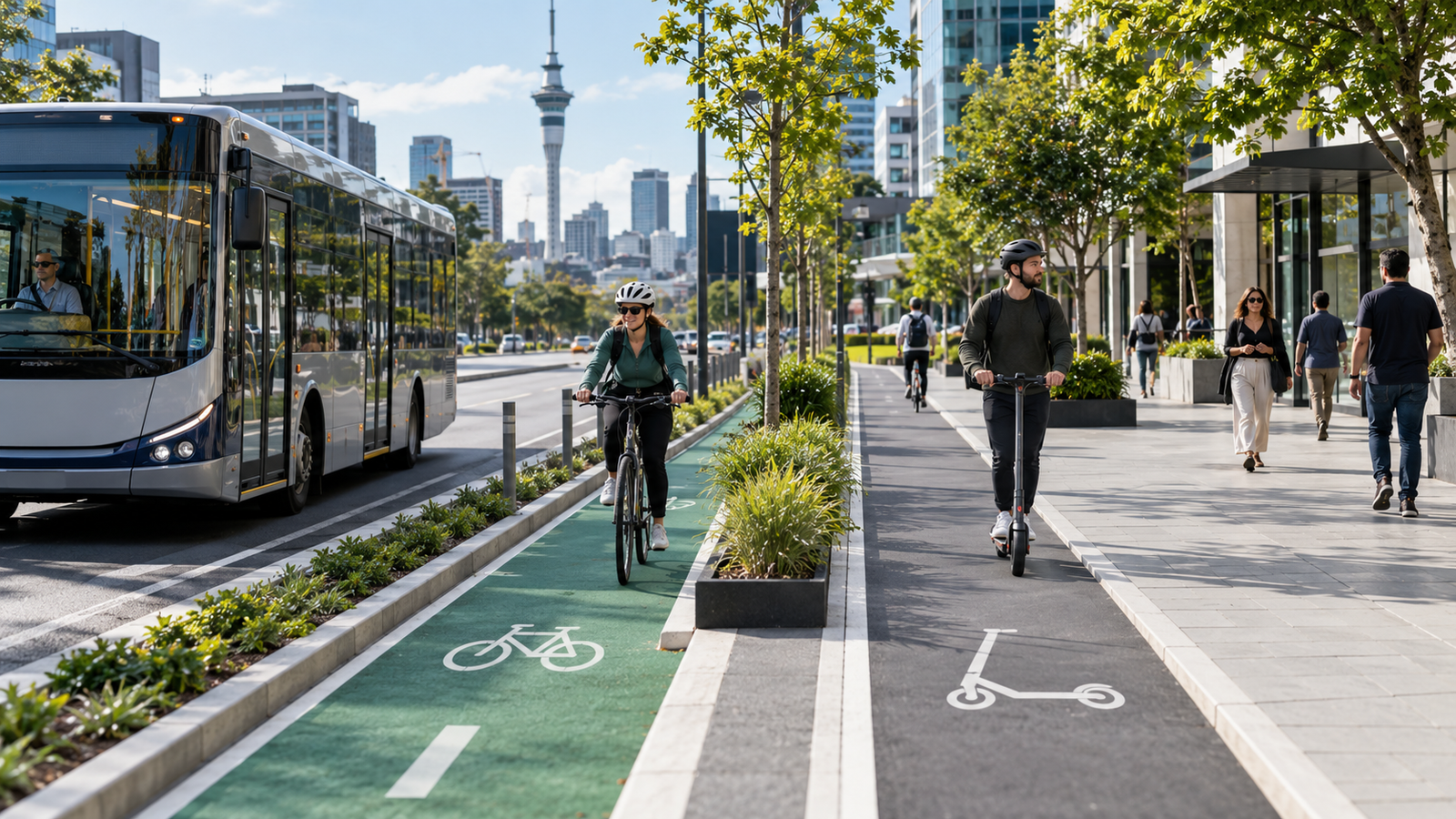
A workable road system shares responsibility
Drivers must pass safely. Riders must follow the rules and cooperate where safe. Road authorities must address predictable design conflicts. Operators must provide realistic schedules and clear incident procedures.
Safety protection must remain, responsibilities must be explicit, and infrastructure must make compliance possible. This follows our discussion of why a few seconds at every bus stop matter: reliable public transport needs rules that work in real traffic.
Sources and scope
Sources: NZTA new lane-use rules; cycling road access; cycling code; low-powered vehicle requirements. For an individual incident, check the applicable legislation, signs and facts; this article does not determine liability.